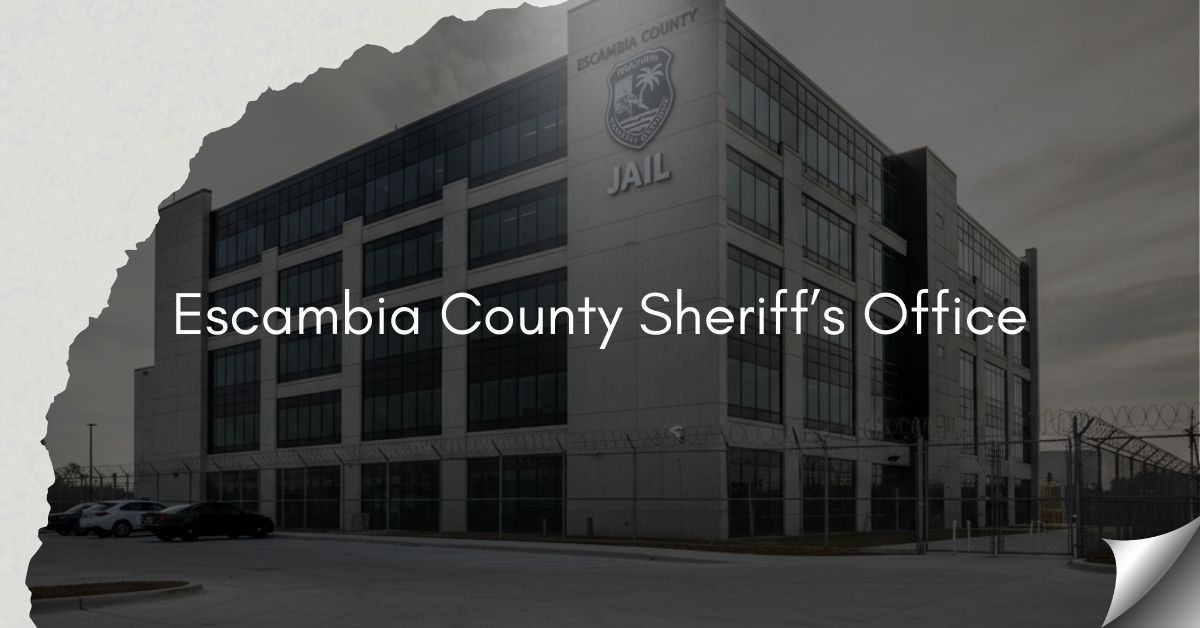
The Escambia County Sheriff’s Office is the primary law enforcement agency responsible for public safety in unincorporated Escambia County, Florida, and the Town of Century. This sheriff department operates under an elected sheriff who holds countywide authority granted by Florida law. The office enforces state statutes, maintains peace, and responds to public safety needs across county-managed areas. It functions separately from city police departments and focuses on county jurisdiction. Residents often rely on the Escambia County Sheriff’s Office for emergency response, crime reporting, and official law enforcement information.
The Escambia County Sheriff’s Office carries out core county law enforcement duties through patrol services, criminal investigations, traffic enforcement, and court-related functions. This law enforcement agency supports the local justice system by serving warrants, providing courthouse security, and handling civil process matters. Deputies respond to calls for service, conduct follow-up investigations, and work with county jail operations when arrests occur. Through daily operations, the sheriff’s department protects property, supports public order, and maintains safety standards across Escambia County communities.
What is the Escambia County Sheriff’s Office
The Escambia County Sheriff’s Office serves as the primary law enforcement agency for much of Escambia County, Florida. The sheriff’s department provides public safety services, patrol support, and legal enforcement under the leadership of an elected sheriff. The Escambia County Sheriff’s Office operates as a countywide law enforcement agency with authority across designated jurisdictions. It focuses on protecting life, property, and public order through patrol duties, investigative work, and court-related functions. In practice, the office acts as a central point for county law enforcement outside city police limits.
Jurisdiction and Areas Served
The sheriff’s department serves unincorporated areas of Escambia County and the Town of Century. These locations depend on the Sheriff’s Office for daily law enforcement coverage, emergency response, and crime prevention efforts. At the same time, municipal police departments handle incorporated cities like Pensacola, working alongside the sheriff’s department when joint efforts are needed.
Service areas include:
- Residential and rural communities
- County roadways and highways
- Public buildings and county facilities
- Courts and judicial locations
Role Within County Government
The Sheriff’s Office functions independently from city police agencies, yet it remains part of the county government structure. Funding typically comes from county-approved budgets, which support staffing, equipment, and public safety programs. In return, the office reports operational outcomes to county authorities and the public.
Leadership by an Elected Sheriff
An elected sheriff leads the agency and answers directly to voters. This role includes setting enforcement priorities, managing deputies and staff, and upholding state and county laws. As a result, the sheriff’s department reflects both legal duties and community expectations through transparent leadership.
Mission, Responsibilities, and Public Safety Role
The Escambia County Jail supports public safety by working alongside law enforcement services to protect life and property. Its role centers on secure detention, lawful custody, and daily operations that support crime prevention and community safety.
Supporting Public Safety Through Responsible Custody
The Escambia County Jail plays a direct role in public safety by housing people who are awaiting court action or serving short sentences. This work supports law enforcement services across the county by maintaining secure facilities and orderly operations. At the same time, the jail follows established procedures that reflect integrity and fairness in daily decision-making. Staff members focus on safety inside the facility and across the wider community. For example, proper intake procedures help confirm identity and custody status. Clear supervision standards reduce risks and support crime prevention efforts. These practices help protect life and property for residents, staff, and visitors.
Responsibilities include:
- Maintaining secure detention areas that meet safety standards
- Supporting law enforcement services after arrests
- Managing inmate movement and housing in a controlled setting
- Reducing safety risks through supervision and training
Community safety remains a central goal. The jail works with courts, local agencies, and public safety partners to support lawful outcomes. At the same time, daily operations emphasize respectful treatment, clear rules, and accountability. This balanced approach strengthens trust and reinforces the jail’s role within the county’s public safety framework.
Sheriff’s Office Headquarters and Contact Information
The Escambia County Sheriff’s Office headquarters serves as the central administrative hub for law enforcement operations in Escambia County, Florida. This location handles public records, community inquiries, and non-emergency law enforcement matters. The Escambia County sheriff office, Florida headquarters, is located at 1700 West Leonard Street, Pensacola, FL 32501. This site supports leadership offices, administrative staff, and public-facing services connected to countywide law enforcement efforts. The building acts as the main point of contact for residents seeking official information through proper channels.
Location, Hours, and Contact Details
The sheriff’s office headquarters operates during standard business hours, which helps the public plan visits and calls without delay. Office staff are available Monday through Friday, 8:00 a.m. to 5:00 p.m., excluding county holidays. These hours apply to in-person requests and administrative phone inquiries.
Non-emergency contact: 850-436-9630
This number supports routine law enforcement needs that do not require immediate response.
Use official channels for:
- Public records and report requests
- Background check inquiries
- Civil process questions
- General administrative concerns
Emergencies should route through 911, since the headquarters phone line does not dispatch urgent response units. For smooth communication, residents benefit from using the correct channel based on the nature of the request. This approach supports public safety operations and helps law enforcement staff respond efficiently.
Divisions Within the Escambia County Sheriff’s Office
The Escambia County Sheriff’s Office is organized into several divisions that handle daily law enforcement duties and public-facing responsibilities. Each division focuses on a specific role that supports safety, accountability, and orderly court operations across the county. These divisions work side by side to respond to incidents, investigate crimes, manage legal processes, and maintain public records. Together, they form the operational structure behind the Escambia County Jail and countywide law enforcement efforts.
Patrol Division
The Patrol Division serves as the front line of the Escambia County Sheriff’s Office. Patrol deputies provide immediate response to emergencies and maintain a visible law enforcement presence throughout the community. Patrol deputies handle most calls for service, ranging from traffic incidents to public safety concerns. Their work includes traffic enforcement, accident response, and enforcement of county ordinances. By staying active in neighborhoods, patrol teams support crime prevention through deterrence and quick intervention.
Daily responsibilities often include:
- Responding to emergency and non-emergency calls
- Conducting traffic stops and roadway safety checks
- Assisting during accidents and hazardous situations
- Supporting community patrols and special events
Patrol units remain in constant communication with dispatch centers, which allows faster response times. This structure helps maintain order in both residential and commercial areas. Through routine patrols and proactive presence, deputies strengthen trust and help reduce repeat incidents across Escambia County.
Investigations Unit
The Investigations Unit focuses on follow-up work after incidents or arrests occur. This unit conducts detailed criminal investigations that require extended review, interviews, and evidence handling. Detectives assigned to the investigations unit manage a wide range of cases. These include major crimes, property offenses, and financial matters tied to economic crimes. Modern investigations often involve cyber investigations, where digital records and online activity play a central role.
Functions handled by investigators include:
- Reviewing reports submitted by patrol deputies
- Collecting and processing physical and digital evidence
- Interviewing witnesses and suspects
- Coordinating with prosecutors and forensic teams
Investigators rely on structured case management systems to track progress and court deadlines. Their work supports accurate charging decisions and helps prepare cases for court proceedings tied to the Escambia County Jail system.
Specialized Law Enforcement Units
Specialized units address tasks that require advanced training and equipment. These specialized units support patrol and investigations during high-risk or technical situations.n One key team is the narcotics unit, which focuses on drug distribution and trafficking activity. The K-9 unit assists with suspect searches, drug detection, and tracking operations. Tactical situations fall under SWAT, which responds to barricaded suspects and high-risk warrants.
Other specialized functions include:
- Dive team operations for water-related searches
- Drone operations for aerial surveillance and scene mapping
- Support for long-term cold cases requiring renewed review
Each unit operates under strict deployment protocols. These teams strengthen enforcement efforts by providing tools and skills beyond routine patrol functions.
Civil Process and Court-Related Units
The Civil Process and Court-Related Units manage legal responsibilities tied to court orders and judicial security. The civil unit handles service of legal documents issued through local courts. Typical duties include delivering subpoenas, eviction notices, and writs authorized by judges. These tasks require precise documentation and verified delivery standards. Court-focused teams handle court security, ensuring safety within judicial facilities during hearings and trials.
Primary responsibilities include:
- Serving civil papers ordered by the court
- Executing approved warrants
- Maintaining courtroom safety and order
- Coordinating with clerks and judicial staff
These units help courts operate smoothly by enforcing lawful orders and protecting staff, visitors, and defendants.
Public Records and Background Checks
The Public Records section manages official information requests submitted to the Sheriff’s Office. This unit processes public records request submissions in line with Florida public records laws. Requests often involve report requests, arrest documentation, or incident summaries. The unit reviews records for release eligibility and prepares official documentation for approved requests. Background checks are handled for employment, licensing, or personal review purposes.
Services handled by this section include:
- Processing written public records requests
- Providing certified or redacted reports
- Conducting name-based background checks
- Verifying record availability and request status
Accurate records handling supports transparency and helps residents obtain verified information connected to Escambia County law enforcement activity.
Escambia County Inmate Search Information
The inmate search Escambia County residents rely on uses jail records maintained by county corrections, with arrest data provided by the sheriff’s office. A complete inmate lookup works best when users search the official jail tool and confirm details carefully.
Where inmate information is maintained
In Escambia County, inmate records are managed by the county jail under the corrections system. This system stores booking details, custody status, charges, and housing information once a person enters detention. Arrest data originates from the sheriff’s office, then moves into the jail database after booking.
For public searches, the most reliable inmate lookup tool is provided through the county’s jail records system:
Official inmate lookup tool: https://inmatelookup.myescambia.com/smartwebclient/jail.aspx
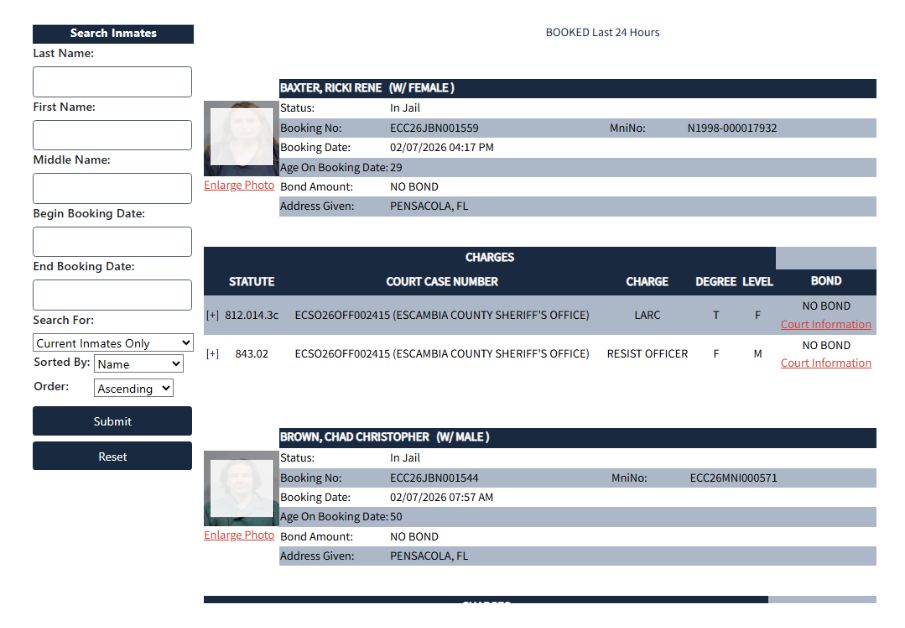
This tool supports name-based searches and displays current custody details. Records refresh regularly, though very recent bookings may appear after a short delay.
Typical information shown includes:
- Inmate’s full legal name
- Booking date and time
- Current jail location
- Listed charges
- Bond or release status
Difference between the Sheriff’s Office and Corrections
The Escambia County Sheriff’s Office functions as the county’s main law enforcement agency. Deputies patrol communities, investigate crimes, and make arrests. Once a person is booked, Escambia County Corrections becomes responsible for detention and inmate record updates. This distinction matters during an inmate search in Escambia County. Arrest details begin with the sheriff’s office, yet jail status and housing details come from corrections records.
Verification guidance for inmate lookup results
Verification helps avoid errors caused by similar names or recent booking delays. Small spelling differences often affect search results. Middle names or suffixes may change outcomes.
Helpful verification steps include:
- Match the booking number with the inmate’s name
- Review booking and arrest dates
- Check the bond status through the jail listing
- Confirm court details with the county clerk
Using the official inmate search tool and reviewing multiple data points gives users reliable inmate lookup results with fewer mistakes.
Jail, Detention, and Corrections
The Escambia County jail operates as the county’s primary detention facility, handling intake, custody, and care of arrested persons. It supports public safety by managing the booking process, inmate housing, and daily jail administration under local authority. The Escambia County jail serves people arrested by local law enforcement agencies across the county. Jail visitation is organized to allow approved family and friends to maintain contact with inmates under set rules and schedules. After an arrest, deputies transport individuals to the detention facility for intake and processing. At this stage, staff confirm identity, document charges, and complete the booking process, which includes fingerprints and photographs. Medical screening follows soon after to address immediate health needs.
Intake, Booking, and Classification
Once booking ends, jail staff classify inmates based on custody level, charges, and safety needs. This step helps maintain order inside the detention facility. Classification decisions guide where a person stays and what supervision level applies.
Booking steps include:
- Identity verification and records entry
- Property inventory and storage
- Initial medical and safety screening
- Housing assignment based on classification
Inmate Housing and Daily Operations
Inmate housing within the Escambia County jail includes general population units and restricted housing areas. Staff separate housing by security level, gender, and other safety factors. Daily operations focus on structured routines such as meals, scheduled movement, and supervised recreation.
Jail staff oversee:
- Secure housing units
- Meal service and sanitation
- Medical care coordination
- Controlled movement inside the facility
Jail Administration and Oversight
Jail administration manages staffing, policies, and facility operations. Administrators work with corrections officers, medical providers, and support staff to keep the detention facility running smoothly. Records management, compliance checks, and coordination with courts remain part of daily responsibilities. For families and the public, the Escambia County jail functions as a holding facility until release, transfer, or court action occurs. Official sources remain the best place for current inmate status, housing details, and custody updates.
Bail and Bond Process in Escambia County
The bail and bond process in Escambia County allows certain arrested persons to secure release from jail before trial. A judge sets the bond amount, and release depends on meeting specific bond conditions and court appearance rules. The Escambia County bond system follows Florida law and works alongside the jail, courts, and licensed bail bond agents. After an arrest, the person is booked into the county jail. Soon after, a judge reviews the charge and sets a bond amount based on the offense, prior history, and public safety factors. Some low-level charges may qualify for a preset bond schedule, so release may happen faster.
Bond serves one main purpose: encouraging the defendant to return for every court appearance. If the bond gets posted, the person can leave custody and wait for court dates outside jail. Missing court can lead to bond forfeiture and a new arrest warrant.
How Bail Bonds Work in Escambia County
Bail can be posted in different ways, depending on the bond type set by the court. Each option carries duties that must be followed carefully.
Common bond options include:
- Cash bond: Full bond amount paid directly to the jail or clerk.
- Surety bond: A licensed bail bond agent posts the bond for a fee.
- Recognizance bond: Release based on a promise to appear in court.
Bail bond agents charge a state-regulated fee, often a percentage of the total bond. That fee does not return, even after the case ends. The agent may request collateral to reduce risk. If the defendant fails to appear, the agent may seek recovery through legal means.
Bond Conditions and Court Responsibilities
Bond conditions set limits on behavior during release. These rules protect public safety and court integrity. Violating them can lead to immediate return to jail.
Common bond conditions include:
- Attending every scheduled court appearance
- Avoiding contact with alleged victims
- Travel limits outside Escambia County
- No new arrests during release
Court dates remain mandatory. Skipping court often triggers bond revocation and loss of posted funds. For updates on bond status or court schedules, the Escambia County Clerk of Court provides official case records during business hours.
Working With the Escambia County Sheriff’s Office
Working with the Escambia County Sheriff’s Office means using clear channels to seek help, share concerns, and support public safety. The sheriff department services are built to encourage cooperation between the community and the local law enforcement agency. The Escambia County Sheriff’s Office acts as a primary law enforcement agency for the county areas outside city limits. Through daily operations, the office supports safety by responding to calls, addressing reports, and maintaining order. Public cooperation plays a direct role in how effectively deputies can respond and follow up on issues. When residents and visitors communicate clearly, outcomes tend to improve.
Requesting Help and Reporting Concerns
Residents can interact with the sheriff department services in several practical ways. For example, reporting crimes helps deputies document events and take action when needed. Requests for help may involve urgent situations or routine matters that still need attention.
Common reasons people contact the Sheriff’s Office include:
- Reporting crimes such as theft, vandalism, or suspicious activity
- Requesting assistance during non-emergency situations
- Asking questions related to ongoing cases or reports
- Sharing tips that support investigations
Non-emergency requests usually go through published phone lines or online forms. Emergencies require contacting 911 so deputies can respond without delay.
Role of a Florida Sheriff’s Office
A Florida sheriff’s office serves as the chief county law enforcement authority with duties set by the state constitution. The office operates under an elected sheriff who answers directly to county voters. A Florida sheriff’s office holds a unique place in public safety. It works independently from city police departments and focuses on countywide duties, including managing the Jail Release Process. This structure gives the office clear county authority over patrol, jail operations, court security, and civil process. The sheriff acts as the top decision-maker, and voters choose this official through local elections.
The constitutional role of the sheriff comes from Florida law. This role defines powers and limits, so the office operates with accountability. Sheriffs manage deputies, set enforcement priorities, and oversee detention facilities like county jails. For Escambia County Jail, the sheriff’s office plays a central part in custody, transport, and facility security.
Responsibilities often include:
- Law enforcement patrols in unincorporated areas
- Jail administration and inmate supervision
- Court security for county courts
- Civil process service, such as summons and writs
This structure helps residents know which agency handles county-level matters.
How an Elected Sheriff Serves the County
An elected sheriff gains authority through public vote, which strengthens transparency. This system links leadership directly to community expectations. A sheriff sets policies, manages budgets, and appoints command staff. Deputies then carry out daily operations under that direction. The Florida sheriff’s office differs from appointed police chiefs. The sheriff does not report to a mayor or council. State law outlines the office’s scope, and county funding supports operations. This balance supports public trust and steady service delivery.
Below is a simple comparison:
| Feature | Sheriff Office | City Police |
|---|---|---|
| Leadership | Elected sheriff | Appointed chief |
| Jurisdiction | County areas | City limits |
| Jail control | Yes | No |
(FAQ) About Escambia County Sheriff’s Office
The Escambia County Sheriff’s Office often creates questions about its duties, authority, and connection to county detention operations. The answers below explain how the Escambia County sheriff and the sheriff’s department serve public safety across the county.
Is the Sheriff’s Office the same as the jail?
The Sheriff’s Office and the county jail serve different roles, even though they work closely within the same justice system. The sheriff department handles law enforcement services such as patrol, investigations, warrants, and court security, while the jail focuses on inmate booking, housing, and custody after an arrest, with detention duties sometimes managed under the sheriff’s authority based on county structure.
How do public records requests work?
Public records connected to the Escambia County Sheriff’s Office follow Florida public records laws and allow the public to request reports, arrest records, or background information. Requests usually go through the records unit and require basic case details, with response time depending on record type, volume, and any legal limits tied to active investigations or protected data.
Where can inmate information be verified?
Inmate information related to Escambia County arrests appears through official county detention resources rather than patrol divisions. These records usually show booking dates, charges, bond amounts, and custody status, with the most accurate updates available through county-managed inmate lookup systems or direct jail contact numbers.
Who oversees the Escambia County sheriff?
The Escambia County sheriff serves as an elected official chosen by county voters during scheduled elections. State law defines the sheriff’s authority, term length, and duties, while county government handles budget review, and public accountability takes place through the election process.
How is the Sheriff’s Office different from city police departments?
The Sheriff’s Office operates countywide in unincorporated areas and supports courts, detention, and civil process, while city police departments focus on law enforcement inside city limits. This structure allows the sheriff’s department to act as a broad law enforcement agency that supports multiple public safety functions beyond routine patrol work.