Escambia County arrest records document when a person is taken into custody by local law enforcement. These records show arrest history and charge info tied to a specific incident, not a court ruling or conviction. They serve as an official record of an arrest event recorded by the Escambia County Sheriff’s Office or local police departments. These records focus on what occurred during the arrest and booking process. They do not decide guilt or reflect a final legal outcome.
Escambia County arrest records are created at the time of booking and stored within law enforcement record systems. They usually list a person’s name, arrest date, arrest location, and the charges reported by officers. Arrest history may include one or multiple booking entries tied to different dates. Charge info shows alleged violations and may change as the case moves forward. These records often include custody status and bond details, which help explain whether a person remains held or has been released. Public arrest data supports transparency while requiring careful review and proper context.
What Are Escambia County Arrest Records
Escambia County arrest records are official law enforcement records created when a person is taken into custody. They document arrest history, charge info, and custody status linked to a specific incident. Escambia County arrest records exist to document interactions between law enforcement and the public during an arrest. These records serve as formal documentation of an event, rather than proof of guilt or a court outcome. They reflect actions taken by an arresting agency at a specific time and place. As a result, arrest records focus on facts recorded at booking.
Arrest records fall under public arrest data in Florida, which means basic details are often available for review. These records help promote transparency and recordkeeping within law enforcement systems. They also help courts and agencies track custody status and case progress.
What an Arrest Record Represents
An arrest record shows that law enforcement had legal grounds to detain a person. It does not confirm a conviction or a final case result. Arrest history only reflects what occurred at the time of arrest. Each record connects to a single event and may remain on file even if charges change later. For example, charges may be dropped or reduced after booking. Even then, the original law enforcement records still exist as part of the public record system.
Details Found in Escambia County Arrest Records
Most Escambia County arrest records include clear booking details that describe the arrest event. These details help explain what happened and which agency handled the case.
Common information includes:
- Full name of the arrested person
- Date and time of arrest
- Arresting agency, such as the sheriff’s office or local police
- Charge information, including offense type
- Booking number and intake location
- Custody status, such as held, released, or transferred
Some records may show bond amounts or housing location within a detention facility. Data fields depend on how the arrest was processed.
Are Arrest Records Public in Escambia County
Yes, arrest records are public in Escambia County under the Florida public records law. Most arrest-related details are open for public review, subject to legal limitations and specific exemptions. The Florida public records law supports transparency by allowing public arrest records to be viewed by the public. These records reflect actions taken by law enforcement at the time of an arrest and do not represent a court ruling.
Florida Public Records Law and Arrest Transparency
Florida public records law classifies arrest records as public records created by government agencies. This allows the public to review arrest history, charge info, booking dates, and arrest locations maintained by Escambia County law enforcement. Escambia County provides an official arrest and inmate lookup tool for public use. This county-managed system displays current jail bookings, custody status, and listed charges directly from the jail database:
Official Arrest Lookup Tool:
https://inmatelookup.myescambia.com/smartwebclient/jail.aspx
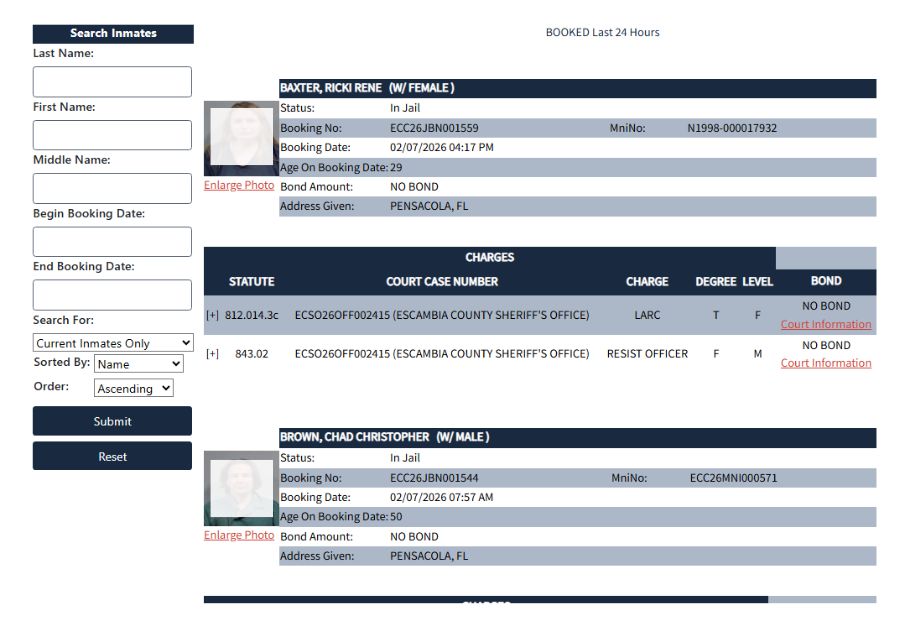
This official tool helps confirm arrest records using data maintained by county authorities.
Public arrest records typically include:
- Full name and age
- Arrest date and booking time
- Arresting agency
- Listed charges
- Booking or case number
These details document reported arrest activity and may change as cases move through the court process.
Legal Limitations and Record Exemptions
Florida law places limits on public arrest records in certain situations. These legal limitations protect privacy, safety, and the integrity of investigations.
Common exemptions include:
- Active criminal investigations
- Juvenile arrest records
- Sealed or expunged arrest files
- Protected victim-related details
When exemptions apply, some arrest information may appear limited or unavailable. This restriction follows state law and court rules.
Public Rights and Responsible Record Use
Public review rights exist under Florida public records law, though responsible use matters. Arrest history and charge info serve informational purposes only and do not confirm guilt. An arrest record may remain public even if charges are later dismissed. Court records provide final case outcomes, not arrest listings. Reviewing both sources gives a clearer and more accurate picture.
What Information Is Included in an Arrest Record
An Escambia County arrest record contains key facts recorded by law enforcement at the time of an arrest. These records focus on arrest details, booking records, and charge information tied to a specific event. Arrest records help the public review what happened during an arrest, without stating guilt or case outcomes. Each record follows a standard format used by county law enforcement agencies.
Core Personal and Arrest Details
Every arrest record begins with clear identity and event details. This section confirms who was taken into custody and when the arrest occurred.
Common data points include:
- Full name of the arrested person
- Date of arrest and time of booking
- Location of arrest, such as a street address or city area
- Arresting agency, often the Escambia County Sheriff’s Office
- Booking number, used to track the case internally
These arrest details help separate similar names and link the record to the correct booking file. Clear identifiers reduce confusion during an arrest lookup in Escambia County.
Charge Information and Case Classification
Charge information explains why the arrest took place. This section lists alleged offenses based on law enforcement reports at booking time.
Typical charge-related details include:
- Charges filed, listed by legal name
- Offense level, such as misdemeanor or felony
- Case or report number linked to the arrest
- Arrest category tied to Florida statutes
Charge listings may change after court review, so arrest records reflect filing status at intake. Arrest history records stop short of listing trial results or convictions.
Booking Records, Custody, and Bond Data
Booking records focus on custody status and release conditions. This data helps families and legal representatives track holding details.
Booking sections often show:
- Bond amount, if the bond applies
- Holding facility name
- Custody status, such as held or released
- Booking date tied to jail intake
Bond figures depend on charge type and court schedules. Some arrests list no bond during early booking stages.
How to Perform an Arrest Lookup in Escambia County
An arrest lookup in Escambia County follows a structured public records process managed by local law enforcement agencies. By checking booking and custody data in the correct order, arrest details and charge info can be reviewed with better accuracy. An arrest lookup Escambia search works best when the search focuses on arrest timing, custody status, and booking records rather than court outcomes.
Identify the Type of Arrest Record Needed
Before starting an Escambia County arrest search, the searcher should decide what type of record is needed. Arrest records may appear as recent booking entries, active inmate search results, or historical arrest history records. Each record type serves a different purpose, so knowing whether the person is currently in custody or was previously arrested helps narrow results and avoid confusion.
Gather Basic Search Details
Accurate search details improve arrest lookup results and reduce duplicate matches. Most booking databases rely on name-based searches, which means partial or common names may return multiple results. Using a full legal name, an estimated arrest date, or age details helps narrow the results and makes it easier to identify the correct arrest entry.
Review Jail Roster and Inmate Search Records
The jail roster shows people currently held in county custody and updates throughout the day. An inmate search result often includes booking number, arrest date, listed charges, and housing status. If a person has been released, their name may no longer appear on the active roster but may still exist in past booking records.
Examine Booking Database Information
Booking database entries provide a snapshot of the arrest event at intake. These records often list charge info, arrest location, bond amount, and the arresting agency. Charges shown reflect allegations at the time of booking and may change later, so these records should be read as intake data rather than final case results.
Account for Posting Delays and Record Updates
Arrest information does not appear instantly after an arrest occurs. Same-day bookings may take several hours to post, and weekend arrests may update on the next business day. Charge changes or custody updates may follow court review, so checking back later often fills in missing details.
Compare Arrest History With Current Custody Status
Arrest history reflects past booking events linked to a name, while custody status shows whether the person is currently detained. Comparing both records helps confirm release status, transfers, or repeated bookings. This step helps separate older arrest records from active inmate listings.
Escambia County Jail, Booking, and Inmate Records Explained
Escambia County jail records, booking records, and inmate records describe different stages of custody after an arrest. Each record type shows where a person is held, why they are there, and what stage of detention applies. Escambia County jail records focus on people held inside a correctional facility after booking. Booking records document the intake process, and inmate records track a person’s status during detention, including the Jail Release Process. Together, these records help the public follow the detention timeline from arrest to release or transfer.
Jail Records vs Arrest Data
Arrest data reflects the moment law enforcement takes someone into custody. Jail records begin later, after booking is complete and placement inside a detention facility occurs. That difference matters for accuracy and timing.
Escambia County jail records often include:
- Full name and booking number
- Housing location inside the jail
- Custody status, such as pretrial or sentenced
- Bond or bail details
- Scheduled court dates
Arrest data may appear quickly after an incident. Jail data updates after intake, classification, and cell assignment. So, a delay between arrest and jail listing is common. Booking records serve as the bridge between these two stages. They log fingerprints, photographs, charge details, and the time custody officially starts. This record explains why a person appears in an Escambia County inmate search even if the arrest happened hours earlier.
Inmate Records and the Detention Timeline
Inmate records track a person throughout detention. These records change as custody status changes. For example, pretrial detainees remain in jail pending court action, and sentenced inmates serve time after a court decision.
A typical detention timeline looks like this:
- Arrest by law enforcement
- Booking and intake processing
- Jail placement and classification
- Court appearance or release
Escambia County updates inmate records as events occur. Release, transfer, or bond posting can change a listing on the same day. Florida public records law allows public viewing of many jail and booking details, though sealed or restricted cases may limit what appears.
Recent Arrests in Escambia County
Recent arrests in Escambia County reflect people taken into custody within the last few days. These records usually appear in a daily arrest log after the intake process begins at the county jail. Recent arrest information helps readers see who has been booked and what charges were listed at the time of arrest. Law enforcement agencies update this data often, so listings may change as new bookings occur or releases happen.
How Recent Arrest Information Is Recorded
Recent arrests in Escambia County follow a standard process after law enforcement makes an arrest. Once officers transport a person to jail, staff begin the intake process, which includes identity checks and paperwork. After intake, the record enters the daily arrest log used by the county.
Each entry often includes key details that help readers interpret the record:
- The booking date shows when the person arrived at the facility
- Arrest charges filed at intake
- Booking or reference number
- Facility name where the person is held
- Temporary holding status before court review
At times, records appear quickly after booking. Other times, posting takes longer due to staff workload or system updates. For that reason, a person arrested earlier the same day may not appear right away.
Arrest Records vs Criminal Records
Arrest records and criminal records serve different purposes within the justice process. An arrest record shows that law enforcement took someone into custody, whereas a criminal record reflects a court’s final ruling after a case moves forward. An arrest alone does not establish guilt. A criminal record forms only after the court reviews the case outcome and issues a formal decision.
What Arrest Records Show
Arrest records document the point at which law enforcement places someone into custody and begin long before any court review occurs. These records usually list basic arrest history details such as the person’s name, arrest date, arresting agency, booking location, and initial charge info. Arrest data focuses on custody status and booking activity rather than legal judgment. Charges linked to an arrest may later change, get reduced, or result in dismissed charges, yet the arrest record can still exist. For this reason, arrest lookup results often include cases that never progressed beyond the early stages of the legal process.
How Criminal Records Differ
Criminal records reflect court-controlled information tied to legal proceedings after charges are filed. They show how a case moved through the justice system and include the court disposition, plea entries, trial outcomes, and sentencing details when applicable. A criminal record confirms whether a conviction occurred, which separates it clearly from arrest data. If a court dismisses charges or issues a not-guilty verdict, no conviction appears on the criminal record, even though an arrest record may remain. Courts, not law enforcement agencies, maintain this data.
Conviction vs Arrest: Why the Difference Matters
The distinction between conviction and arrest plays a major role in legal reviews, screenings, and public interpretation of records. An arrest reflects suspicion at a moment in time, whereas a conviction confirms responsibility after judicial review. Many cases end with dismissed charges, plea withdrawals, or acquittals, which means no criminal record forms despite an earlier arrest. Readers reviewing Escambia County arrest records should always check case outcomes carefully, since arrest data alone does not reflect guilt or final court decisions.
Accuracy, Updates, and Limitations of Arrest Data
Escambia County arrest records aim to reflect real booking activity, yet record accuracy can vary by source and timing. Updates often follow set reporting cycles, so recent events may not appear right away. Arrest data comes from law enforcement systems that collect details at the time of booking. These systems rely on manual entry and scheduled uploads, so data updates may lag behind real-world events. A person booked overnight, for example, may not show up until the next update window. This gap leads to reporting delays, which can confuse users searching for the current status.
Errors can appear during intake or data transfer. Clerical errors may affect names, dates, or charge descriptions. Some records stay marked as open even after release, since custody changes post-verification steps. In rare cases, charges listed at booking differ from later court filings, which creates incomplete records from a public view. To improve clarity, users should treat arrest records as time-based snapshots rather than final case summaries.
How Verification and Updates Affect Record Accuracy
Most Escambia County arrest data updates once or twice per day, depending on the reporting system used. Each update passes through internal checks before public release. This process supports record verification, yet it takes time.
Common limits users should expect include:
- Delays between arrest and public listing
- Missing bond or release details
- Charge titles that change after review
- Records removed or hidden after sealing
The table below shows how timing affects visibility:
| Stage | Data Status |
|---|---|
| Initial booking | Partial entry |
| First system update | Basic arrest info |
| Verified update | Charges and custody status |
| Post-review | Corrections or removals |
For the most reliable results, arrest records work best as reference points. Court records confirm outcomes, since arrest data alone does not reflect guilt, dismissal, or sentencing.
Mugshots and Arrest Photos in Escambia County
Escambia County mugshots and arrest photos are official images taken when an individual is booked into jail. These photos serve as part of the public arrest record and provide visual documentation of the booking process. Mugshots are captured by law enforcement immediately after arrest to record an individual’s appearance at the time of detention. They are typically taken from multiple angles, including front and side profiles. These images are kept on file with the Escambia County Sheriff’s Office and may be included in arrest records available to the public under Florida’s public records statutes.
Purpose of Mugshots
The primary purpose of arrest photos is to maintain accurate law enforcement records. They help authorities:
- Verify the identity of the individual detained.
- Track repeat offenders or individuals with outstanding warrants.
- Assist in investigations if additional crimes occur.
Mugshots can also play a role in court proceedings, helping ensure proper identification throughout the judicial process.
Public Availability
While Escambia County mugshots are part of the arrest record, their public availability can vary. Some images may be released online through the sheriff’s official arrest logs or jail rosters. Access to these records is typically limited to prevent misuse, and sensitive information, such as details about minors, is protected under state law.
(FAQ) About Escambia County Arrest Records
Escambia County arrest records provide details about arrests, including charges, booking dates, and custody status, but they do not indicate guilt. An arrest lookup in Escambia allows users to view official arrest information from local law enforcement. These records help the public and legal representatives verify arrest history and related data.
How Far Back Do Records Go?
Arrest records in Escambia County typically include arrests from several years ago, with most public logs dating back at least five to ten years. Older records may be stored in archives or require a formal request through the sheriff’s office. Each record generally lists the individual’s name, charges, booking date, arresting agency, and custody status. Some historic entries may appear in summary form without detailed charge information or photos. Users should keep in mind that availability can vary depending on the facility.
How Often Are Records Updated?
Escambia County arrest records are updated regularly, often multiple times daily, for new bookings and releases. Updates reflect changes in custody status, pending charges, or corrections to previously recorded information. Real-time inmate rosters and arrest logs are sometimes available through official channels. Minor delays can occur due to processing times or data verification. For the most accurate results, users should rely on the official sheriff’s office database.
Can Records Be Wrong?
Although uncommon, errors in arrest records can happen due to incorrect personal information, wrong charges, or outdated custody details. Mistakes usually occur during the booking process or data entry. If inaccuracies are found, individuals or their representatives can contact the Escambia County Sheriff’s Office to confirm or correct information. Official records include booking numbers, arrest dates, and charge descriptions to support accuracy.
Do Arrests Mean Guilt?
An arrest does not imply that someone is guilty of a crime. Arrest records only show that an individual was taken into custody based on suspicion or evidence. Legal proceedings follow arrests, and cases can result in dismissal, acquittal, or conviction. Arrest logs provide charge information, booking dates, and the arresting agency, but they do not reflect the outcome. It is important to distinguish arrest records from criminal conviction records, which are maintained separately.
Additional Tips for Using Arrest Lookup Escambia
Using full legal names improves search accuracy when performing an arrest lookup in Escambia County. Official sources, such as the sheriff’s office, provide the most current and reliable information. Users can view mugshots, custody status, and bond details, but these do not indicate case resolution. Arrest history should be treated carefully, respecting legal standards and privacy rules. Checking records regularly ensures access to updated public data.